


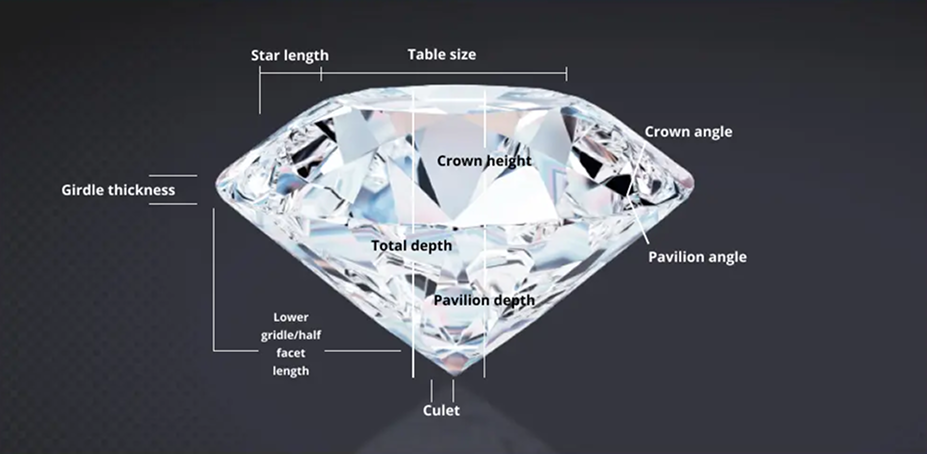
The cut is considered by many to be the most important C. A poorly cut diamond, no matter how great its color and clarity is, will not compare in sparkle and fire to a better cut diamond with comparatively lower color and clarity grade There will always be different opinions on the best diameter of the largest facet on the top of the stone and the best depth for a diamond because these factors alone are not sufficient to accurately judge a diamond’s cut. Other diamond factors such as crown angle, girdle thickness, pavilion depth-percentage, cutlet size, polish, and symmetry also play a vital role in judging a diamond’s overall cut quality.
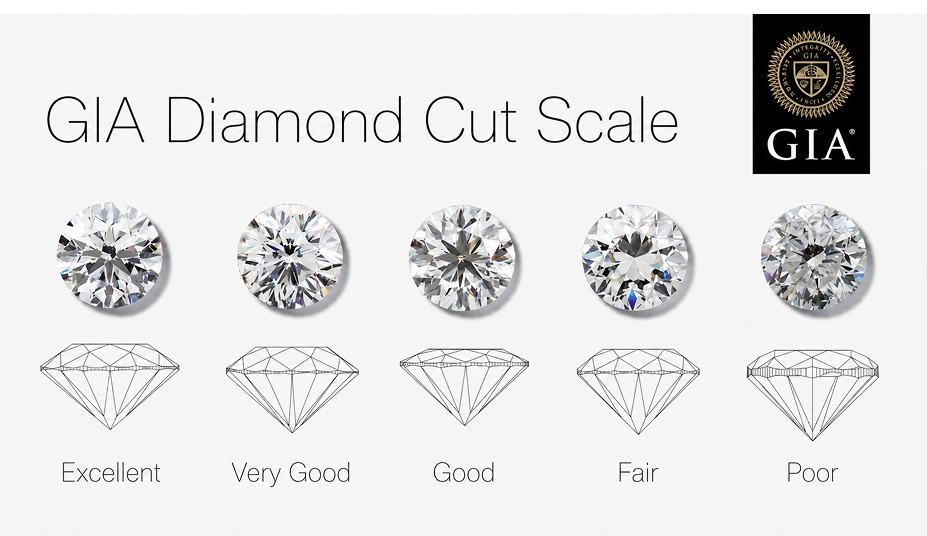
Diamond cut chart
Each lab uses its terminology, which can sometimes be confusing.
For example, GIA calls its top grading Excellent followed by Very Good, while other labs use the terminology Very Good as their top grade. A diamond graded Very Good by GSL, for example, would, therefore, be the equivalent of a diamond graded Excellent by GIA.
- GIA: Excellent – Very Good – Good – Fair – Poor
- HDR: Very Good – Good – Medium – Fair – Poor
- AGS: Ideal – Excellent – Very Good – Good – Fair – Poor
- DCLA: Excellent – Very Good – Good – Medium – Poor
- GSL: Very Good – Good – Medium – Poor
While grades are not the same, it is typically recommended to buy a diamond with a Good grade or better regardless of who has provided a certificate. It’s not recommended to buy diamonds with grades of Medium, Fair, or Poor, as the alignment of their facets may misdirect light so severely that it affects the brilliance of the diamond.
Other factors affecting cut
Proportions are not the only thing that affects cut. Other factors have to do with the type of geometry and quality of the result.
GIRDLE THICKNESS
In round diamonds, a thin to medium girdle is preferred (too thick will result in a smaller diameter for the respective weight; too thin has durability issues). This can vary with fancy shapes. For example shapes with sharp points are vulnerable to damage, so a thicker girdle ensures better durability. Side note: girdles can be faceted, polished, or bruted.
PRESENCE OF CUTLET
This refers to how consistent the diamond facets are. One misshapen facet can affect the facets surrounding it, setting off a chain reaction affecting angles, and reducing brilliance. Sometimes symmetry flaws are introduced on purpose to remove an inclusion and get a higher clarity grade. Poor symmetry affects the reflection of light. So it is better to stick with very good or excellent symmetry for round diamonds. Fancy shapes should be evaluated on a case-by-case basis, but the symmetry grade can be very good, and good must be evaluated.
Common symmetry flaws include:
- Off-center table or cutlet
- Unequal facets
- Misshapen facets
- Wavy Girdle
- Non-parallel table and girdle
Contact Us
We Buy Diamonds For Cash
Get in touch with us to sell any of your diamond pieces for the best value.
 Trusted Diamond Jewelry Buyers
 One Client at a Time
 Same-Day Cash & Wire
Signs of poorly cut stone
Aside from a lower level of brilliance and light return, there are several telltale signs of a poorly cut diamond. Keep these in mind when shopping for a stone.
BOW TIE
In longer fancy cut shapes like oval, marquise, or pear, there will often be black patches resembling a bowtie across the width of the diamond’s body. This occurs when the facets do not reflect light properly, and if it is present, you will see these black patches no matter which way you turn or tilt the diamond. Bow Ties occur due to light obstruction while viewing the stone, not light leakage. The actual process of viewing a diamond creates this effect, when an observer looks at a stone, the light rays traveling to the stone are blocked by the viewer’s head, which creates dark shadows that reflect within the stone. The cutter can eliminate or lessen the intensity of bow ties, but it may not be economically feasible to do so (losing too much weight = less profit).
On the bright side, slight bow ties can give fancy shaped diamonds an appealing look that defines their overall character. The bowties that you want to avoid are the ones that blackout a large area. Bowties will almost always appear to some degree in fancy cuts like ovals, marquises, and pears, but the presence of a bowtie does not automatically render a stone worthless. If these stones were cut to eliminate any incidence of bow-ties, they’d generally be cut to dismal proportions and would have issues with brilliance. Just look for a stone where the bowtie blends in well. Bowties are never mentioned in grading reports, and online diamond distributors can’t always provide you with visual assurance.
FISHEYE
When diamonds are cut too shallow, the internal reflections of the girdle can be seen in the table fact, creating an image of a gray ring that is visually distracting. These stones suffer from a lack of brilliance, and the ring can sometimes resemble an I3 type inclusion. The severity of the fisheye can depend on factors such as:
- Shallow pavilion angles—shallow depth can cause light rays to be reflected from the girdle back through the table. The light reflects in a way that causes less brilliance and makes pronounces cut defects
- Large table facet — Larger tables reduce refraction
- Girdle thickness — girdles leak light
Evaluating light performance in diamonds
If you have 3 GIA triple excellent diamonds, how can you tell which one has the best light performance? This is where tools like the ASET (Angular Spectrum Evaluation Tool) and IdealScope come in.
The ASET scope provides more information about light performance. For fancy cut diamonds especially, the ASET is the preferred tool for evaluating light performance. However, it does take more knowledge to decipher what the colors mean and how they relate to the diamond’s optics.
The simplicity of the IdealScope brings a certain degree of lucidity to the table. You do not need any gemological qualification to figure out which aspects of an idealscope image to pay attention to. Red is desirable and indicates light return, while diamonds with too many white areas indicate problems with light leakage.
Sell Your Diamonds to Denver’s Expert Diamond Trader
Contact Us
We Buy Diamonds For Cash
Get in touch with us to sell any of your diamond pieces for the best value.
Trusted Diamond Jewelry Buyers
One Client at a Time
Same-Day Cash & Wire
What Our Clients Say


Had a great experience with Jamie, she was so patient and is very knowledgeable of her work!

Yosso and others were nice people... welcoming and very accommodating to your needs.. would recommend it to be your first stop!

Great experience from start to finish. Very knowledgeable and professional. JAmie was great!

Very friendly and helpful with our family coin collection.

My whole experience was very simple and straightforward, which was just what I’d hoped.

I had a great experience working with Yossi at Benadato Trading Company. He gave me a fair offer for my diamonds and took the time to walk me through the entire process, explaining each step along the way. He was knowledgeable, straightforward, and easy to work with, and I never felt any pressure. If you're looking to sell diamonds and want someone you can trust to treat you fairly, I highly recommend Yossi and the team at Benadato Trading Co.


I had a great experience at Benedato. They were very transparent, and knowledgeable. Yosso explained everything to me and I felt confident in our transaction. Thank you!!

Jamie and Yossi are fantastic! What a great and efficient process. Everything is clearly explained and the value is great! Highly recommend.

Very professional and an overall great experience.

Honest discussion with charts to verify information. Offered education and was easy to work with.

Yossi and Jamie are so amazing. They were so helpful. Thank yall for the help.

Awesome experience, quick fair super professional

I sold my old gold jewelry to Benadato Trading Co. in Cherry Creek and would recommend them to anyone looking to sell gold in Denver. The evaluation was free, with no pressure to sell. The team explained the karat and weight of each piece and how the offer ties to today's gold price. I got a fair price and was paid the same day. Honest, professional gold buyers. Highly recommend!

Reviewed by

Co-Founder & Diamond Expert
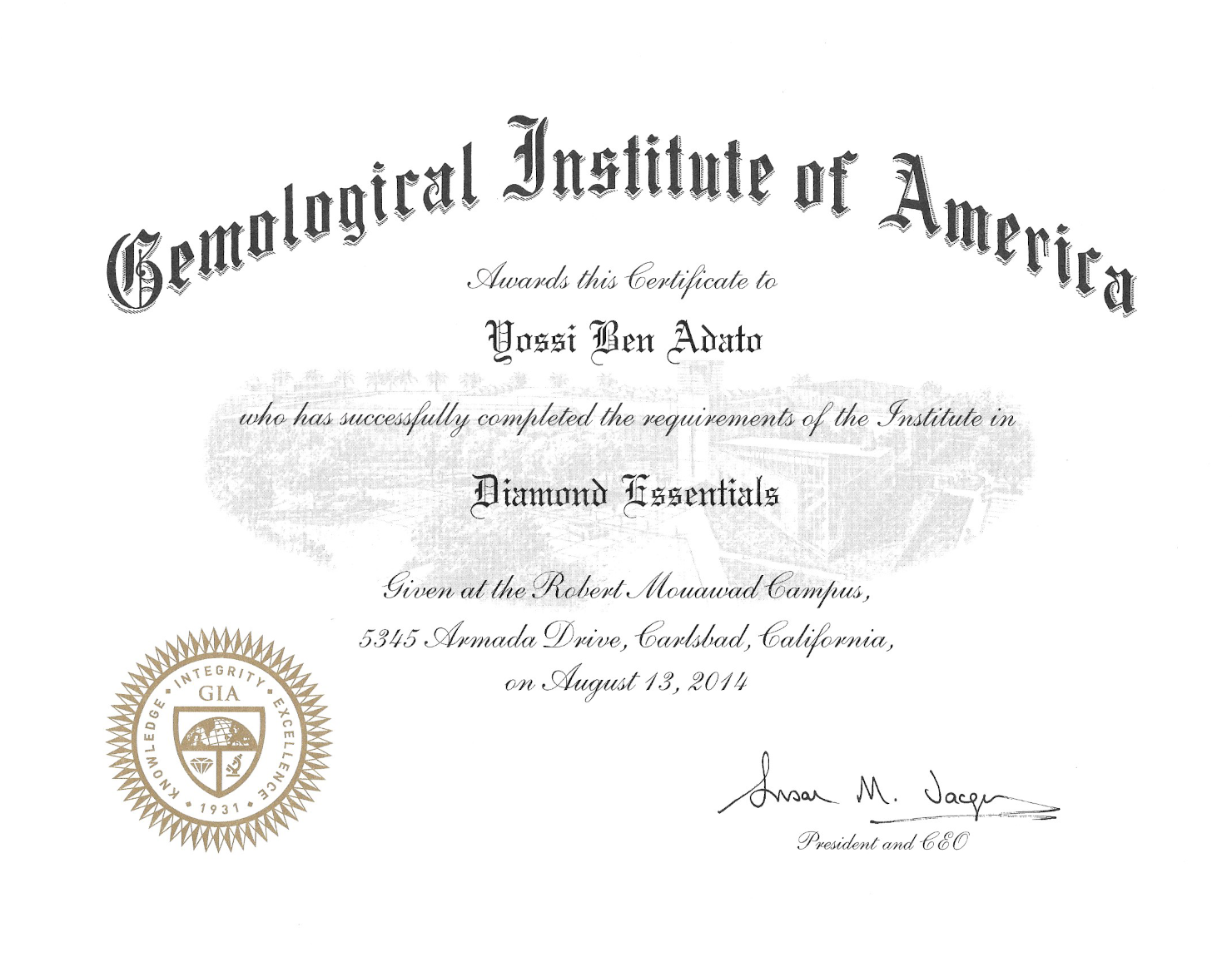
- GIA (Gemological Institute of America), Diamond Essentials, 2014
- Institute for Diamond Studies, Ramat Gan: Course in Gemology, Diamond Grading & Evaluation, 2003
Second-generation diamond dealer who learned cutting and trading from his father in Israel. Founded Benadato Trading Co. in 2011, and has operated from our Cherry Creek office since 2014, where he evaluates diamonds and luxury watches.
 loading="lazy"
 loading="lazy"
 loading="lazy"